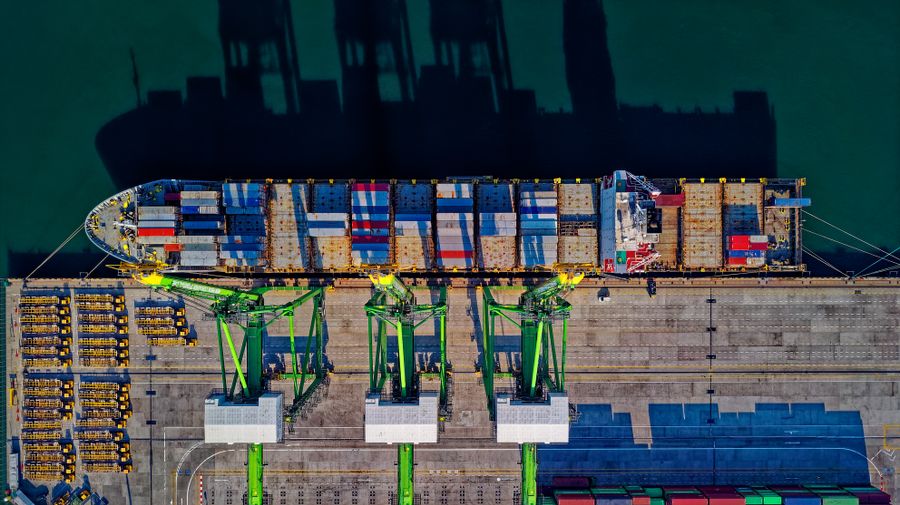
The World's Trade Is Priced by a Handful of Chokepoints


About four fifths of the goods the world trades travel by sea, by volume. That is the number UNCTAD reports every year in its Review of Maritime Transport, and it has barely changed in a generation. What has changed is how fragile the routes that carry it have become, because the map of global shipping is not a web. It is a set of funnels.
The Strait of Malacca carries the bulk of trade between the Indian Ocean and East Asia, including most of the oil bound for China, Japan and South Korea. The Suez Canal shortens the Asia-to-Europe run by roughly two weeks compared with going around the Cape of Good Hope. The Panama Canal links the two American coasts and the Atlantic to Asia. The Strait of Hormuz handles a fifth of the world's oil. The Bosporus is the outlet for Black Sea grain. Close any one of them and the effect is not local; it is a repricing of freight everywhere.
The mechanism is capacity. A container ship that must sail around Africa instead of through Suez is at sea for ten to fourteen extra days. Over a year, that removes a slice of the world's effective fleet from service, because the same ship completes fewer voyages. Freight rates rise not because demand changed but because supply, measured in available ship-days, shrank. The 2021 blockage of the Suez Canal by a single grounded vessel and the Red Sea diversions that began in late 2023 both showed the effect within weeks.
Water adds a second constraint at Panama. The canal's locks depend on rainfall in the Gatun Lake watershed. In dry years the authority limits the number of daily transits and the draft of ships that can pass, which forces carriers to load less cargo or reroute. A canal that can pass thirty-six ships a day in a wet year and twenty-four in a dry one is a different piece of infrastructure, and shippers plan around the worse case.
Insurance is the third lever, and the quietest. War-risk premiums for transits through contested waters are set by a small number of underwriters and can move from a fraction of a percent of hull value to several percent in days. That cost lands on the cargo owner, then on the retailer, then on the price tag.
The result is that trade costs are less a function of distance than of a few decisions made in a few places: a canal authority's rainfall forecast, an insurer's risk committee, a government's control of a strait. Companies have responded by holding more inventory, by diversifying supplier countries, and by paying for shipping contracts that guarantee capacity. All of that is a tax on efficiency, paid in exchange for reliability.
The longer-term response is infrastructure: Arctic routes that ice retreat may open for part of the year, overland rail across Eurasia, a proposed second Panamanian canal that has been proposed for a century. None is close to replacing the funnels. For the foreseeable future, the price of a pair of shoes in Sydney or a car part in Ohio will carry a small line item for whether a few narrow stretches of water stayed open that season.