
Latest coverage

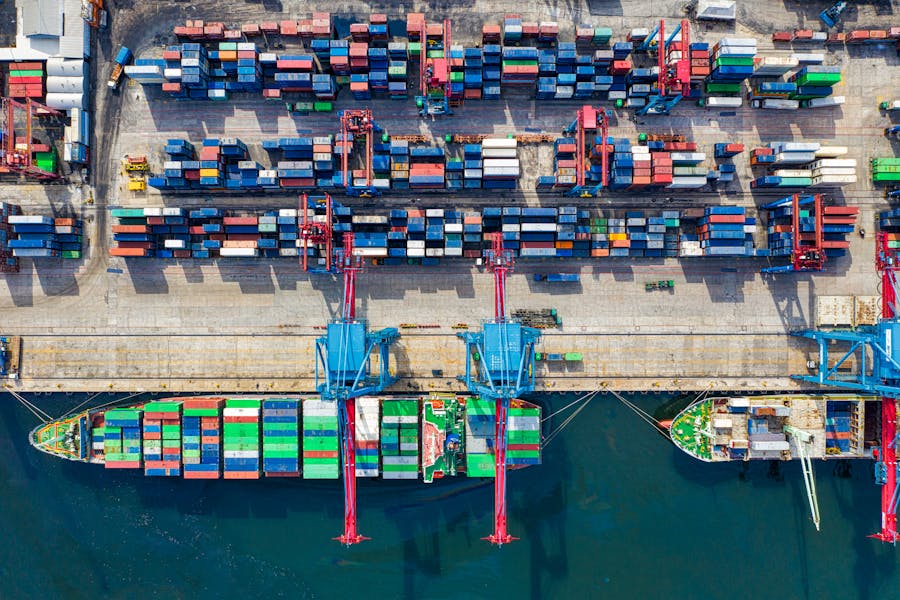
The World's Trade Is Priced by a Handful of Chokepoints
Suez, Panama, Malacca, Hormuz, the Bosporus. Most of what moves by sea passes through a few narrow places, and the cost of everything on a shelf depends on whether they are open.

An Election Calendar Is a Volatility Calendar. Here Is the Rest of 2026.
Markets do not fear elections. They fear not knowing the result, and the weeks before a vote are when that uncertainty is priced. What is left on the calendar this year, and what each contest tends to move.

Data Centres Are Now an Electricity Story, and the Grid Is the Constraint
The International Energy Agency puts data-centre power use at around 415 terawatt-hours in 2024 and expects it to more than double by 2030. The binding limit on artificial intelligence is turning out to be transformers, transmission lines and permits.

Europe's Carbon Border Tax Started Charging This Year. Here Is Who Pays.
After a two-year reporting phase, the EU's Carbon Border Adjustment Mechanism entered its definitive period on 1 January 2026. Importers of steel, cement, aluminium, fertiliser, electricity and hydrogen now owe for the carbon in what they bring in.

Recorded Music Made $29.6 Billion Last Year. Here Is Where the Money Stops.
The industry's own trade body reports a tenth consecutive year of growth, driven almost entirely by streaming. The question the headline number does not answer is how much of it reaches the people who made the music.

Remittances Are Now Larger Than Foreign Aid. The Fees Have Not Caught Up.
Migrants sent close to 700 billion dollars home to low- and middle-income countries last year, more than official aid and foreign direct investment combined. Sending 200 dollars still costs more than 6 percent on average, three times the global target.
The World's Debt Numbers Come From the Borrowers, Not the Lenders
Almost every headline figure about developing-country debt traces back to one World Bank collection system in which the country that owes the money files the loan-by-loan return. Its rules decide what the world can see.

Half the World's Power Capacity Is Renewable. That Is Not the Same as Half Its Electricity
IRENA counts machines; the IEA counts output. The two datasets describe the same energy transition and produce very different-looking numbers, because a gigawatt is a ceiling and a terawatt-hour is a result.
World
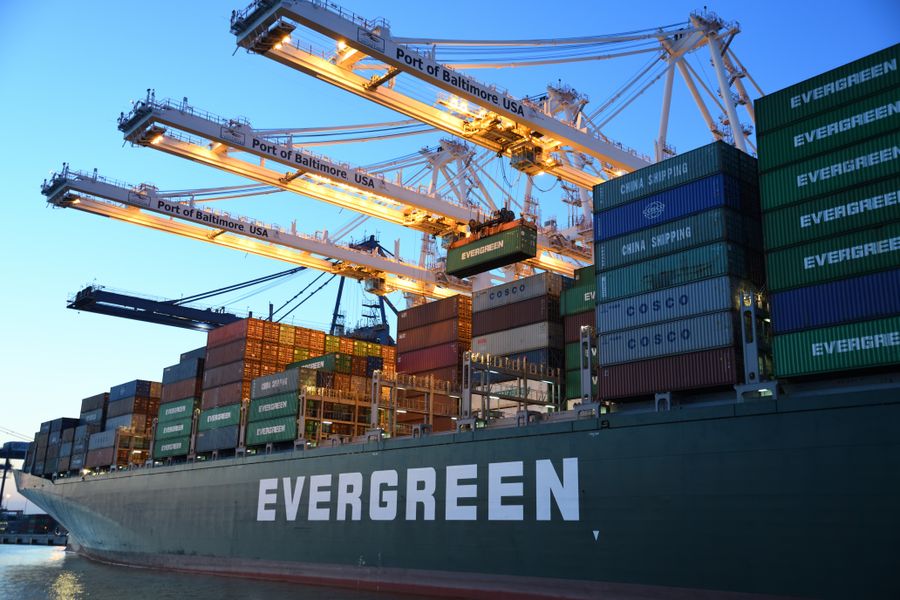
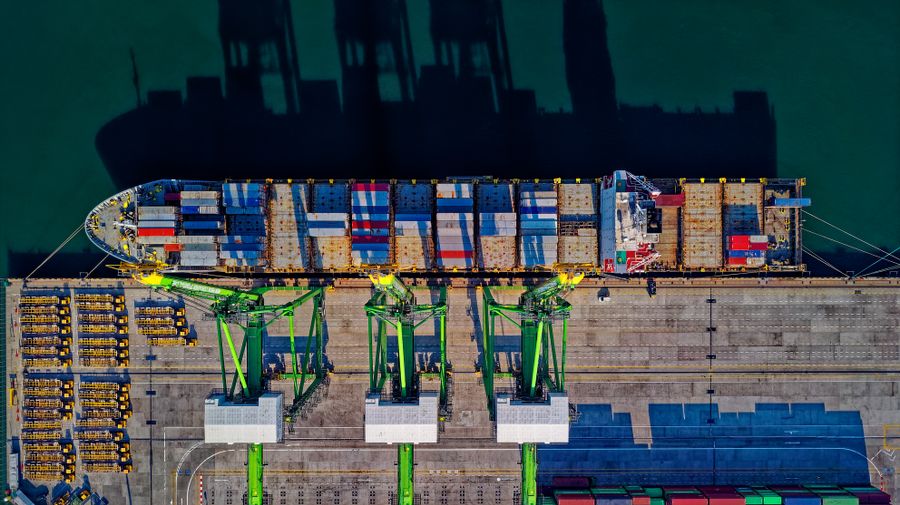
The World's Trade Is Priced by a Handful of Chokepoints
Suez, Panama, Malacca, Hormuz, the Bosporus. Most of what moves by sea passes through a few narrow places, and the cost of everything on a shelf depends on whether they are open.
Remittances Are Now Larger Than Foreign Aid. The Fees Have Not Caught Up.
Migrants sent close to 700 billion dollars home to low- and middle-income countries last year, more than official aid and foreign direct investment combined. Sending 200 dollars still costs more than 6 percent on average, three times the global target.
A Hague return order sends a child back to a country, not to a parent — the Convention says so in a single sentence
The 1980 Child Abduction Convention allocates jurisdiction, not custody, and it asks courts to do it in six weeks. The most recent global study of applications found the average case took 207 days, and fewer than four in ten ended in a return.
Ninety-Eight Submissions Ask the UN Where Their Seabed Ends. The Body That Answers Them Is Barred From Settling a Single Boundary.
The Commission on the Limits of the Continental Shelf is twenty-one geologists, geophysicists and hydrographers elected five years at a time. Its founding text says its actions shall not prejudice matters relating to delimitation of boundaries between States with opposite or adjacent coasts, and its own rules stop it from examining a submission caught in a dispute unless every party to that dispute consents.
Politics
An Election Calendar Is a Volatility Calendar. Here Is the Rest of 2026.
Markets do not fear elections. They fear not knowing the result, and the weeks before a vote are when that uncertainty is priced. What is left on the calendar this year, and what each contest tends to move.

The UN Charter says substantive Security Council decisions need “the concurring votes of the permanent members”. Since 1946 the Council has read an abstention as concurrence anyway
Article 27(3) was amended once, in 1965, and the amendment raised the vote threshold without touching the concurring-votes phrase or mentioning abstention. Yet the Council's own records show dozens of non-procedural decisions adopted while a permanent member sat out, and in 1971 the International Court of Justice rejected a challenge founded on exactly that practice. The gap between the text and the practice is where a great deal of Council business happens.

The Antarctic Mining Ban Does Not Expire in 2048. What Becomes Possible That Year Is a Meeting Nobody Is Obliged to Call.
Article 7 of the 1991 Madrid Protocol prohibits any activity relating to mineral resources other than scientific research, with no end date. Article 25 allows any Consultative Party to request a review conference 50 years after the Protocol entered into force on 14 January 1998 — and sets conditions that make repeal harder than the date's reputation suggests.
Two UN Member States Are Sitting in the General Assembly Without a Vote. The Assembly Never Voted to Take It Away.
Article 19 of the UN Charter withdraws a member's vote automatically once arrears reach two years' assessed contributions. The only thing the General Assembly can vote on is giving the vote back.
Economy
The Term Premium Quietly Became the Most Important Number in Markets
Long-term interest rates are no longer just a bet on where central banks are going. A second component, the compensation investors demand for holding long bonds at all, is doing more of the work, and it answers to different masters.
The World's Debt Numbers Come From the Borrowers, Not the Lenders
Almost every headline figure about developing-country debt traces back to one World Bank collection system in which the country that owes the money files the loan-by-loan return. Its rules decide what the world can see.
The Basel bank capital rules bind nobody until a national regulator writes them into domestic law — the Committee's own charter says its decisions 'do not have legal force'
The Basel Committee on Banking Supervision has no treaty, no founding statute and no power to compel anyone; its charter states in terms that it possesses no formal supranational authority. Nearly eight years after the final Basel III package was agreed and almost three years after its deferred deadline, the Committee reported that on data as of 30 September 2025 the revised market risk standards were in effect in fewer than half of its 27 member jurisdictions.
There Is No Agreed World Definition of “Made In”. The Programme to Write One Opened in July 1995 and Has Missed Every Deadline Since.
WTO members gave themselves three years to harmonise the non-preferential rules that decide a product's country of origin. Three decades on, the agreement's operative obligations still sit under a heading that reads “Disciplines During the Transition Period,” and what members have instructed the secretariat to run is a set of information sessions described as an “educational exercise.”
Tech & Science
Data Centres Are Now an Electricity Story, and the Grid Is the Constraint
The International Energy Agency puts data-centre power use at around 415 terawatt-hours in 2024 and expects it to more than double by 2030. The binding limit on artificial intelligence is turning out to be transformers, transmission lines and permits.

The Outer Space Treaty bars national appropriation of outer space: what a satellite operator actually holds is a frequency assignment recorded by the ITU, and a seven-year clock to use it
The 1967 treaty states that outer space “is not subject to national appropriation by claim of sovereignty, by means of use or occupation, or by any other means”, and no instrument consulted here confers title to a point 35,786 km above the equator. What exists instead is a queue run under the ITU Radio Regulations, in which priority is fixed by the date a filing is received and lost if a satellite is not brought into use in time.

An air crash report is not a verdict, and the rules that govern it forbid it from becoming one
The international rulebook for accident investigation, now in its thirteenth edition, states that apportioning blame or liability is not the purpose of the exercise. The organisation most people assume conducts these inquiries almost never does.

World Time Has Been Adjusted Twenty-Seven Times Since 1972. In 2022 the Metrology Conference Voted to Loosen the Rule Behind Them.
Leap seconds keep Coordinated Universal Time within 0.9 seconds of the Earth's rotation, and every one of them has been an insertion rather than a deletion. In 2022 the General Conference on Weights and Measures resolved to raise that tolerance in or before 2035 without deciding what the new value should be, and asked for a plan to be drafted for its 2026 meeting.
Climate
Europe's Carbon Border Tax Started Charging This Year. Here Is Who Pays.
After a two-year reporting phase, the EU's Carbon Border Adjustment Mechanism entered its definitive period on 1 January 2026. Importers of steel, cement, aluminium, fertiliser, electricity and hydrogen now owe for the carbon in what they bring in.
Half the World's Power Capacity Is Renewable. That Is Not the Same as Half Its Electricity
IRENA counts machines; the IEA counts output. The two datasets describe the same energy transition and produce very different-looking numbers, because a gigawatt is a ceiling and a terawatt-hour is a result.

The Paris Agreement's Compliance Committee Is Non-Punitive by Treaty Design — and in 2025 It Opened Consideration of 171 Parties at Once
Article 15 requires an "expert-based and facilitative" committee that functions in a manner that is "transparent, non-adversarial and non-punitive". Its annual report shows what that looks like in practice: hundreds of missing documents, a round of notifications, and a guide to where help can be found.
The IPCC Does Not Carry Out Any Research. The Document Everyone Quotes Is Agreed Line by Line With Member Governments in the Room.
In the Panel's own procedures, “approval”, “adoption” and “acceptance” are three different acts with three defined meanings. The thousands of assessment pages beneath the famous summary are accepted, not approved — they never go through the line-by-line stage at all.
Entertainment
Recorded Music Made $29.6 Billion Last Year. Here Is Where the Money Stops.
The industry's own trade body reports a tenth consecutive year of growth, driven almost entirely by streaming. The question the headline number does not answer is how much of it reaches the people who made the music.

The $31.7 Billion Music Industry Figure Is Not What Listeners Spent
IFPI's headline number counts revenue booked by record companies, not money paid by the public. Its published methodology sets out exactly which pounds, pesos and yen are inside the line and which are not.

The Treaty Behind Film Quotas and Cultural Subsidies Refuses to Rank Below Any Other Treaty — Then, in the Next Paragraph of Article 20, Says It Modifies None of Them
UNESCO's 2005 Convention declines to be subordinated to any other treaty in one paragraph and disclaims modifying any other treaty in the next. Twenty-one years after adoption, what that combination actually delivers is still argued over.

The Beijing Treaty gave film actors five exclusive rights, then let national law hand all five to the producer
The Beijing Treaty on Audiovisual Performances took twelve years to negotiate and entered into force in 2020. Article 12 is the provision that made agreement possible, and it is the one that decides who actually owns a performance.
More coverage
The UN Charter says substantive Security Council decisions need “the concurring votes of the permanent members”. Since 1946 the Council has read an abstention as concurrence anyway
Article 27(3) was amended once, in 1965, and the amendment raised the vote threshold without touching the concurring-votes phrase or mentioning abstention. Yet the Council's own records show dozens of non-procedural decisions adopted while a permanent member sat out, and in 1971 the International Court of Justice rejected a challenge founded on exactly that practice. The gap between the text and the practice is where a great deal of Council business happens.
The Basel bank capital rules bind nobody until a national regulator writes them into domestic law — the Committee's own charter says its decisions 'do not have legal force'
The Basel Committee on Banking Supervision has no treaty, no founding statute and no power to compel anyone; its charter states in terms that it possesses no formal supranational authority. Nearly eight years after the final Basel III package was agreed and almost three years after its deferred deadline, the Committee reported that on data as of 30 September 2025 the revised market risk standards were in effect in fewer than half of its 27 member jurisdictions.
The Outer Space Treaty bars national appropriation of outer space: what a satellite operator actually holds is a frequency assignment recorded by the ITU, and a seven-year clock to use it
The 1967 treaty states that outer space “is not subject to national appropriation by claim of sovereignty, by means of use or occupation, or by any other means”, and no instrument consulted here confers title to a point 35,786 km above the equator. What exists instead is a queue run under the ITU Radio Regulations, in which priority is fixed by the date a filing is received and lost if a satellite is not brought into use in time.
The Beijing Treaty gave film actors five exclusive rights, then let national law hand all five to the producer
The Beijing Treaty on Audiovisual Performances took twelve years to negotiate and entered into force in 2020. Article 12 is the provision that made agreement possible, and it is the one that decides who actually owns a performance.
A Hague return order sends a child back to a country, not to a parent — the Convention says so in a single sentence
The 1980 Child Abduction Convention allocates jurisdiction, not custody, and it asks courts to do it in six weeks. The most recent global study of applications found the average case took 207 days, and fewer than four in ten ended in a return.
An air crash report is not a verdict, and the rules that govern it forbid it from becoming one
The international rulebook for accident investigation, now in its thirteenth edition, states that apportioning blame or liability is not the purpose of the exercise. The organisation most people assume conducts these inquiries almost never does.
Ninety-Eight Submissions Ask the UN Where Their Seabed Ends. The Body That Answers Them Is Barred From Settling a Single Boundary.
The Commission on the Limits of the Continental Shelf is twenty-one geologists, geophysicists and hydrographers elected five years at a time. Its founding text says its actions shall not prejudice matters relating to delimitation of boundaries between States with opposite or adjacent coasts, and its own rules stop it from examining a submission caught in a dispute unless every party to that dispute consents.
There Is No Agreed World Definition of “Made In”. The Programme to Write One Opened in July 1995 and Has Missed Every Deadline Since.
WTO members gave themselves three years to harmonise the non-preferential rules that decide a product's country of origin. Three decades on, the agreement's operative obligations still sit under a heading that reads “Disciplines During the Transition Period,” and what members have instructed the secretariat to run is a set of information sessions described as an “educational exercise.”
The IPCC Does Not Carry Out Any Research. The Document Everyone Quotes Is Agreed Line by Line With Member Governments in the Room.
In the Panel's own procedures, “approval”, “adoption” and “acceptance” are three different acts with three defined meanings. The thousands of assessment pages beneath the famous summary are accepted, not approved — they never go through the line-by-line stage at all.
Forty-Five Per Cent of the World's Cargo Capacity Is Registered in Three Countries. The Flag Is Not Decoration. It Is the Law That Applies.
UN Trade and Development's Review of Maritime Transport 2025, published in 2025, counts 112,501 commercial vessels and 2.44 billion deadweight tonnes of capacity at 1 January 2025 — and Liberia, Panama and the Marshall Islands account for 45.1 per cent of that capacity between them. Under the law of the sea, the register — not the owner, the builder or the crew — decides who must inspect, certify and investigate.
A Treaty From 1886 Forbids Making Copyright Depend on Paperwork. The US Copyright Office Still Issued 415,780 Registrations in Fiscal 2025.
Article 5(2) of the Berne Convention says the enjoyment and the exercise of these rights shall not be subject to any formality, and WIPO Lex listed 182 contracting parties when consulted on 4 September 2026. In the United States registration does not create the copyright — it decides what a copyright owner can collect.
The Antarctic Mining Ban Does Not Expire in 2048. What Becomes Possible That Year Is a Meeting Nobody Is Obliged to Call.
Article 7 of the 1991 Madrid Protocol prohibits any activity relating to mineral resources other than scientific research, with no end date. Article 25 allows any Consultative Party to request a review conference 50 years after the Protocol entered into force on 14 January 1998 — and sets conditions that make repeal harder than the date's reputation suggests.
One Hundred and Thirty Countries Honour a Stamp That Certifies Nothing About What the Document Says.
The Hague Apostille abolished the consular legalisation chain for foreign public documents. What the square certificate actually vouches for is a signature, a capacity and a seal — never the truth of the paper it is attached to.
Two UN Member States Are Sitting in the General Assembly Without a Vote. The Assembly Never Voted to Take It Away.
Article 19 of the UN Charter withdraws a member's vote automatically once arrears reach two years' assessed contributions. The only thing the General Assembly can vote on is giving the vote back.

The IMF Created SDR 456 Billion in a Single Day. It Was Divided by Shareholding, and the United States Received SDR 79.5 Billion of It.
A Special Drawing Right is not a currency, and not a claim on the IMF. The largest reserve creation in the Fund's history was distributed in proportion to quotas — which is why one member received SDR 79.5 billion and another received SDR 2.4 million.
A Kyoto Protocol Amendment Set Targets for 2013 to 2020. It Entered Into Force on 31 December 2020.
The Doha Amendment created a second round of legally binding emission targets for the years 2013 through 2020, and became law on the last day of that period. The delay was not an accident of politics so much as a mechanical consequence of how the Kyoto Protocol wrote its own amendment clause.
World Time Has Been Adjusted Twenty-Seven Times Since 1972. In 2022 the Metrology Conference Voted to Loosen the Rule Behind Them.
Leap seconds keep Coordinated Universal Time within 0.9 seconds of the Earth's rotation, and every one of them has been an insertion rather than a deletion. In 2022 the General Conference on Weights and Measures resolved to raise that tolerance in or before 2035 without deciding what the new value should be, and asked for a plan to be drafted for its 2026 meeting.

One Hundred Countries Belong to a 1961 Treaty on Paying Musicians for Airplay. The United States Is Not One of Them.
The Rome Convention asks its members — unless they reserve against the provision — to require a single equitable payment when a commercially released recording is broadcast. The United States never joined, and when it ratified the 1996 treaty covering the same ground it filed a formal declaration limiting the obligation to certain digital transmissions.
Every Country on Earth Joined the Ozone Treaty. Twenty-Four Have Not Joined Its Climate Amendment.
The Montreal Protocol is the rarest object in international law: a treaty with 198 parties and a measurable result in the sky above Antarctica. In 2016 it was rewritten to control a family of gases that do nothing to the ozone layer at all — and that amendment, nine years after adoption, still has fewer parties than the treaty it amends.

There Is No Such Thing as a World Patent. Nearly 276,000 Applications a Year Are Mistaken for One.
The Patent Cooperation Treaty produces a document called an international application, filed at a single office and effective in more than 150 countries at once. It grants nothing. What it actually buys is eighteen extra months, a search report nobody is obliged to follow, and an irreversible publication of the invention at month eighteen.

Countries Once Delivered Each Other's Mail for Free. Repairing That Bargain Nearly Cost the Postal Union the United States.
A treaty signed in Bern in 1874 turned the world into a single postal territory on one condition: each country kept the postage it collected and delivered incoming foreign mail without charge. That worked while the flows balanced. The settlement system built after they stopped balancing has been rewritten twice since 2019.

The World's Poverty Line Moved to $3.00 a Day. Nobody Got Poorer.
In June 2025 the World Bank raised its international poverty line from $2.15 to $3.00 a day, and about 125 million more people appeared below it overnight. The number is not an ambition set in Washington: it is the median of what the poorest countries themselves call poverty, converted through a price survey run across 176 economies.
A Red Notice Is Not an Arrest Warrant. Here Is What INTERPOL Actually Circulates.
INTERPOL held 223,641 valid notices in circulation in 2024, fewer than 18,000 of them public. The organisation has no power to arrest anyone, and its constitution forbids it from undertaking activities of a political character — a prohibition policed by a task force of lawyers, police officers and operational specialists, and by a seven-member commission that received a record 2,586 admissible requests in 2024.

Every Phone, Plane and Satellite Obeys One Rulebook. It Is Rewritten Once Every Four Years.
The Radio Regulations — a four-volume treaty covering 8.3 kilohertz to 3,000 gigahertz — mark their 120th anniversary this year, and the edition currently in force took effect on 1 January 2025. The next revision will be negotiated in Shanghai between 18 October and 12 November 2027. This is how governments divide the invisible resource that everything wireless depends on.
Nearly Four in Ten Deaths Worldwide Are Not Registered. Almost Everything Else Is Built on That Count.
Civil registration is the least visible piece of state infrastructure there is: a ledger of births and deaths that quietly underwrites legal identity, public health and the population figures the rest of the world argues over. In much of the world it does not work.
A Court With No Police Force: How the International Criminal Court Was Designed to Depend on the States It Judges
The ICC can issue an arrest warrant against a sitting head of state. It cannot serve one. That is not a flaw that crept in — it is the bargain that made the Court possible at all.

Thirty Per Cent of a Streaming Catalogue in Europe Must Be European. The Catalogue Is Not Where the Argument Ends.
Content quotas moved from broadcast schedules to on-demand catalogues, and the law now reaches the shelf. What it cannot reach is the viewing hour — and Europe's own audiovisual observatory has the numbers that show the difference.
Almost Everyone Now Lives Under a Mobile Signal. Two Billion Still Do Not Use It
The ITU's latest edition nowcasts 74 per cent of humanity online, yet only about 312 million people live beyond any mobile broadband network. The distance between coverage and use is now the harder problem.
Eight Datasets, One Number: How the World Settles on the Global Temperature
The WMO put 2025 at 1.44 C above the 1850-1900 average by consolidating eight independent records. The method, and the long-term warming level - typically over 20 years - that the Paris 1.5 C goal actually refers to, explain most of the confusion.
Informal Work Is the World's Default Arrangement, and the Statistics Are Only Now Catching Up
About 2.1 billion people work outside formal arrangements, roughly 58 per cent of global employment, a share that has barely moved in a decade. New international standards are changing what counts as informal.
Four Narrow Waterways Carry the World's Trade. Here Is What Happens When One Closes.
Suez, Panama, Hormuz, Malacca: the global economy runs through a handful of chokepoints most people never think about — until they jam.

The Veto: How Five Countries Can Stop the United Nations, and Why That Was the Point
The Security Council's veto is the most criticised feature of the UN — and the reason the UN exists at all. An explainer.
How Sanctions Actually Work — and Why They So Often Don't
The world's most-used foreign policy tool sits between talking and shooting. Its record is more complicated than either its fans or critics admit.
Washington's Midterms Are a Domestic Election With a Global Blast Radius
Control of Congress shapes trade, aid, alliances and tariffs. Here is how the rest of the world reads an American midterm.
More People Are Displaced Than Ever. The System Meant to Protect Them Was Built for a Different Century.
Over 120 million people are forcibly displaced, on UNHCR's count. The 1951 rules that govern their treatment were written for post-war Europe.
BRICS Keeps Adding Members. What the Expanding Club Can — and Cannot — Do
The bloc now spans major energy exporters and most of the Global South's heavyweights. Its ambitions are large; its machinery is loose.